For students who came from India, the Pskov weather was going to be entirely new to them, unlike anything they have experienced back home. Pskov is located in the northwestern part of Russia, and it has a moderate continental climate. The mean January temperature of the region is around −3°C, as per the Federation Council of Russia.
Knowing what the weather is like before you go to a place will help you to adjust there. Students who are going to study in Russia are very much in for a shock, not just with the cold, but with what you should wear, what footwear to use, how to get around, and how a lot is changing. If you go to study at Pskov State University, these are nine handy things you should know about surviving your first winter in Pskov.
Understanding Winter in Pskov
Winter in Pskov, compared to what Indian students may be accustomed to, would involve cold temperatures, shorter days, and the necessity of winter clothing. Being aware of such differences will allow you to better prepare yourself for the first few weeks in Pskov.
Preparing for Your First Winter in Pskov
Proper preparation will help international students get adjusted to the changes more easily. Whether it is selecting proper clothes and shoes, understanding accommodation issues, or participating in outside activities, small things done in advance will make daily life easier. Moreover, Pskov State University also offers international students chances to participate in various cultural activities, language clubs, excursions, and other university activities.
-
Pskov Weather Can Be Much Colder Than India
It is very important to understand the fact that there is a vast difference between the weather in the winter months in Pskov and that experienced in most regions of India in winter. Weather statistics show that January is the coldest month with an average temperature of -5°C, although the next month is also fairly cold. Still, it should be kept in mind that each day may have its own weather conditions.
-
Layering Is More Important Than Carrying One Heavy Jacket
Selecting appropriate clothing is perhaps the easiest method of getting used to the winter climate of Pskov. Rather than relying on a single heavy piece of clothing, there is an option for students to wear layered clothing. An example of a simple winter dressing is:
-
Thermal base layer
-
Sweater or fleece layer
-
Winter jacket
-
Warm pants
-
Gloves
-
Hat
-
Scarf
-
Warm and Waterproof Footwear Matters
Your shoes are equally important as your coat. When the climate becomes cold, the students might have to move around from their accommodations to the university and elsewhere. Some qualities that a good winter shoe should have are:
-
Insulation
-
Water-resistance
-
Proper fit
-
A grip sole
The students must not pick shoes for their looks alone. More important is their comfort and safety while spending winters in Pskov.
-
Prepare for Changes in Your Daily Routine
Cold weather can influence how students plan their day. You may spend less time outdoors and prefer to complete errands together rather than making several separate trips.
Simple planning can help. Check the weather before leaving, wear appropriate layers, and allow additional time when walking outdoors. Students should also avoid assuming that winter conditions will remain identical throughout the season. Weather can vary, so flexibility is useful.
-
Your First Winter May Take Some Adjustment
However, for Indian students coming to Pskov, one of the main difficulties could be coping with cold weather conditions, which would be much worse than anything they ever had to deal with before.
Naturally, the first days would be strange. Instead of trying to adapt right away, students can slowly figure out the appropriate clothes for themselves, as well as the time they can stay outside.
-
Understand Your Accommodation Before Arrival
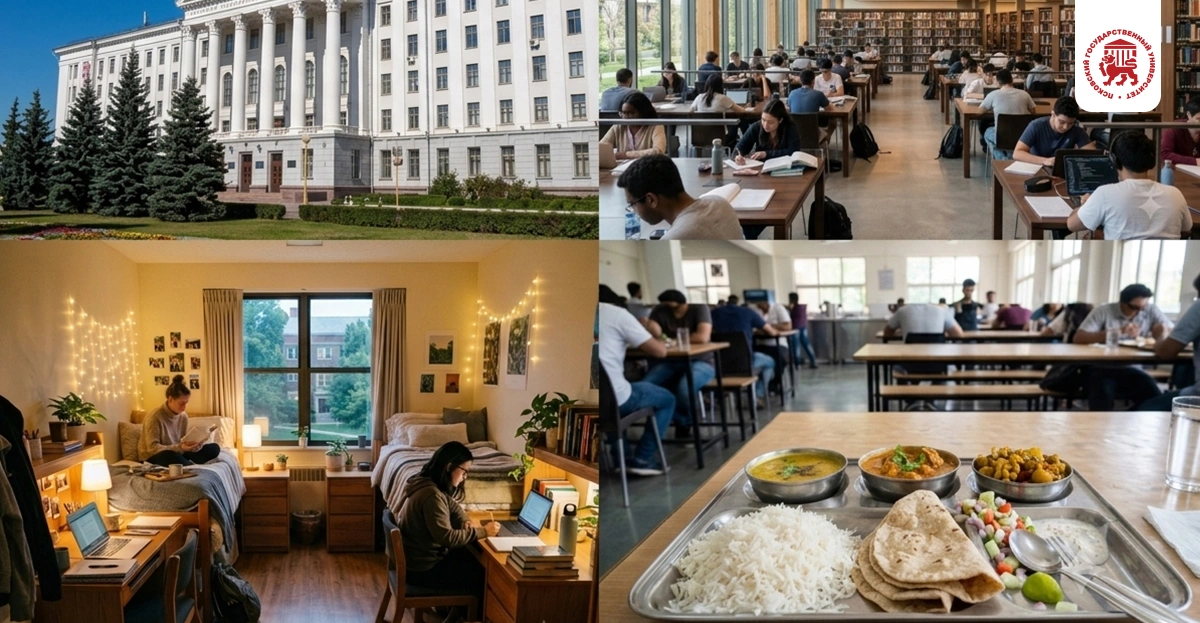
The issue of accommodation is also crucial when it comes to preparations for the winter season in Pskov. According to the Study in Russia website, there are nine dormitories at Pskov State University that accommodate more than 1,950 students.
The website gives detailed information on accommodation requirements and dormitories.
It would be better to check the requirements and what one needs to take before departure since each dormitory may have different facilities.
-
Student Life Does Not Stop During Winter
Despite the cold season, Pskov State University student life is not restricted to classrooms and accommodation only.
The activities recommended by the university for international students include excursions, student forums, language clubs, and sports competitions. These activities will aid international students in getting acquainted with their surroundings and engaging with other students.
As far as an international student is concerned, engaging in relevant activities can ease adaptation to a new environment.
-
Learn to Plan Around the Weather
One of the best practices during winter in Pskov is monitoring weather conditions before going outdoors. Here are some basic tips:
-
Before going out, check the forecast.
-
Clothe yourself appropriately based on the weather conditions.
-
Have your gloves, a hat, and everything else close at hand.
-
Allow additional time for any trips you have to make outside.
-
Do not stay outside unnecessarily in very cold weather.
It does not mean avoiding winter altogether. This is just learning how to adapt your schedule to the weather.
-
Give Yourself Time to Adapt to Life in Russia
However, one must take into consideration the fact that coming from India to Russia requires adjusting not only to low temperatures but also to new surroundings, language, cuisine, transport, and routine as well.
Pskov State University has a lot of experience working with international students. According to the information provided by the university itself, international student programs offered by this institution are designed to assist students in developing language skills and getting used to new conditions of life.
As the university claims, there are students from more than 60 countries who participate in these Russian language programs. For future students of Russia, this process should be taken into consideration beforehand.
What Should Indian Students Pack for Their First Winter?
A basic winter checklist can include:
| Item | Why It Matters |
| Thermal layers | Help provide additional warmth |
| Insulated winter jacket | Protection from cold outdoor conditions |
| Warm footwear | Helps keep feet comfortable |
| Gloves | Protect hands from cold |
| Winter hat | Useful for outdoor travel |
| Scarf/neck warmer | Additional protection around the neck |
| Warm socks | Useful for extended outdoor activity |
| Moisturising products | Helpful during cold, dry conditions |
Indian students in Pskov should check their university's current instructions before finalising what to pack.
Conclusion
Winter preparation in Pskov weather does not necessarily need to be hard. All you need to do is know the weather of that place, wear appropriate clothes, and get your accommodation sorted.
This first winter experience in India for an Indian student could be challenging, but the right preparations can make things easier for you. Apart from that, participating in university events and understanding the environment can make your college experience more worthwhile.
If you are thinking about studying at Pskov State University in Russia, then you should research all of these aspects prior to leaving.
FAQs
Is Pskov very cold in winter?
Pskov experiences cold winters. The Federation Council of Russia lists the region's average January temperature at around −3°C, while climate averages show January as the coldest month. Actual temperatures can vary during the season.
What should Indian students wear in Pskov winter?
Students should prepare warm, layered clothing, including an insulated jacket, thermal layers, gloves, a winter hat and suitable footwear.
Does Pskov State University provide student accommodation?
Yes. The official Study in Russia profile lists nine Pskov State University dormitories with a combined capacity of more than 1,950 students. Students should check current accommodation rules and availability before arrival.
How can international students adapt to life at Pskov State University?
The university provides opportunities connected with language learning, cultural activities, excursions, student forums, language clubs, and sports competitions, which can support international students' adaptation.