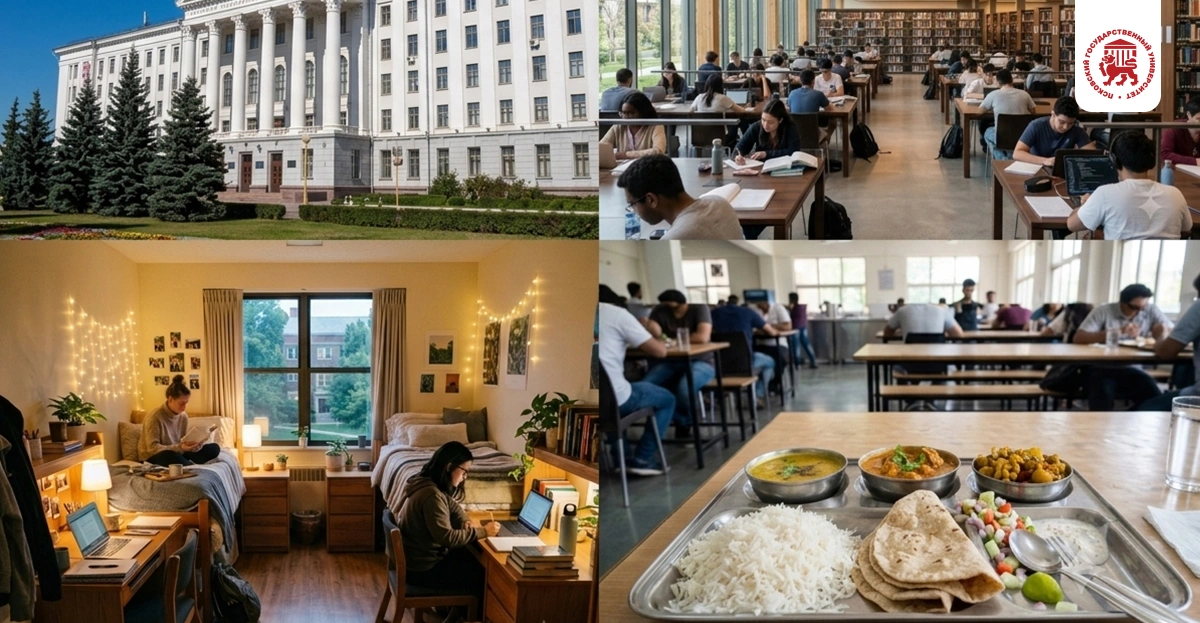
It is 6:30 in the morning at Pskov State University, and a new day is dawning in the vicinity of the Velikaya River, thousands of kilometres away from home. Pskov State University, it is all a matter of habit, one that has been developed out of classes, laboratories, hostel food, and a tiny Russian city. If your own admission process to Pskov State University is already behind you, here's a realistic hour-by-hour look at what comes next.
Morning: Hostel Life and the Walk to Class
The majority of Indian students have to reside in hostel facilities not far from the Institute of Medicine and Experimental Biology, where the MBBS course takes place. One of the things that can wake up a person in the morning is breakfast, which can be either eaten when the necessary supplies are at hand or bought in the hostel canteen. The weather in Pskov plays a major role in determining the daily activities. For example, it requires layers of warm jackets and boots during winter months when there are heavy snowfalls, and a very relaxed pace of living when the Northwest Summer comes around.
Classroom Hours: What MBBS at Pskov State University Looks Like
For students planning to study MBBS in Russia, understanding the classroom experience at Pskov State University can help you see how lectures, practical sessions, laboratory learning, and clinical exposure fit into a typical medical-education routine.
Lectures and Labs
This is where the real work happens. Classes for MBBS at Pskov State University are conducted in English, with subjects like anatomy, physiology, and biochemistry taught through lectures and hands-on laboratory sessions. Professors are generally approachable, and with partner institutions across more than twenty countries, classrooms often feel like a genuinely international cohort.
Library Time and Language Lessons
Between classes, many students head to the university library, home to close to a million printed volumes and several electronic library systems. Basic Russian language lessons are usually woven into early semesters too, one more small but real part of settling into the Pskov State University student life.
Afternoons: Food, Friends, and the Indian Student Community
Lunch breaks are when the community side really shows. The Indian students at Pskov State University have built a close-knit network over the years, and it's common to see groups sharing home-style meals or swapping notes on which nearby shop stocks the best masala or dal. Several canteens and small eateries around campus now cater specifically to South Asian tastes, a change that's made daily life in Russia noticeably smoother for newer batches.
Free afternoons are often spent at Pskov's Central Market, picking up fresh produce and seasonal berries from regional farmers, or browsing one of the city's shopping centres. These small rituals are as much a part of Pskov State University student life as coursework; they're what make a foreign city start to feel liveable.
Evenings: Student Life in Pskov Beyond the Classroom
For Indian students pursuing MBBS at Pskov State University, evenings can be a chance to relax, connect with classmates, explore Russian culture, and take part in student activities beyond academics.
Clubs, Sports, and River Walks
Once lectures wrap up, student life in Pskov opens up considerably. The university's Center for Student Initiatives runs clubs and events year-round, from a history club to sports leagues and student television, giving Indian students plenty of ways to get involved outside academics. Evening walks along the Velikaya River embankment are a favourite, especially in summer, when the northern sky stays light well into the night.
Weekend Trips Around Pskov
Weekends are for exploring further afield. The Pskov Kremlin, known locally as the Krom, with its centuries-old Trinity Cathedral, is a short trip from most hostels. History-minded students often add Izborsk Fortress or the region's historic monasteries as easy day trips that make the Pskov State University student life feel like more than just a medical degree.
Night Study Sessions: Preparing for a Global Medical Career
By 8 or 9 PM, the pace shifts again. Hostel study rooms and the library fill up with students revising the day's material or working through practice questions. Choosing to study in Pskov, Russia, comes with the understanding that the degree eventually needs to translate into a recognised medical career back home, and most students build that awareness into their routine early on, pairing regular coursework with structured revision rather than leaving it for the final years. Our guide to FMGE and NExT preparation covers this side of the journey in more depth. By 11 PM or so, most students are winding down, ready to do it all again the next morning.
Why Indian Students Choose the Pskov State University Student Life
Looking back, most students cite a few reasons this routine works so well:
-
Affordable tuition and hostel costs compared to private MBBS seats in India
-
English-medium teaching with a genuinely international classroom
-
A supportive, tight-knit Indian student community that eases homesickness
-
A safe, walkable city with a manageable cost of living
-
Recognition from India's National Medical Commission, which matters enormously for the return-home career path
None of this replaces the hard work medical school demands, but it does mean the Pskov State University student life comes with a genuinely lived-in, supportive routine, not just a degree on paper. The university, a flagship regional institution established in 2010, has grown steadily as a base for this kind of international life, and the surrounding city, including its UNESCO-listed historic churches, adds a cultural dimension few students expect.
Conclusion
A single day rarely tells the whole story, but it's usually enough to show why the Pskov State University student life resonates with so many Indian families deciding whether to study in Pskov Russia, for their MBBS. Between lectures, hostel life, city walks, and late-night revision, students here build both a medical foundation and a genuine second home. If you're still comparing options, our breakdown of why Pskov State University stands out among Russian medical universities is a good next stop, and if you're ready to take the next step, reach out to our admissions team for personalised guidance on beginning your own journey.
FAQs
Is Pskov safe for Indian students?
Yes. Pskov is a quiet, low-crime city, and the university has hosted international students long enough that most families feel reassured within the first few weeks.
What language are MBBS classes taught in?
Classes for MBBS at Pskov State University are conducted in English, with optional Russian language lessons offered alongside for everyday communication.
Is Indian food easily available near the campus?
Yes. Several nearby eateries and grocery stores cater specifically to Indian students, alongside hostel canteens that regularly serve familiar home-style meals.
What is the weather like for someone moving from India?
Pskov has a continental climate with cold, snowy winters and mild summers, a significant shift for most Indian students, so proper winter wear is essential.
Are there many other Indian students already at the university?
Yes. Indian students at Pskov State University form one of the larger international groups on campus, with an established community that helps new arrivals settle in quickly.