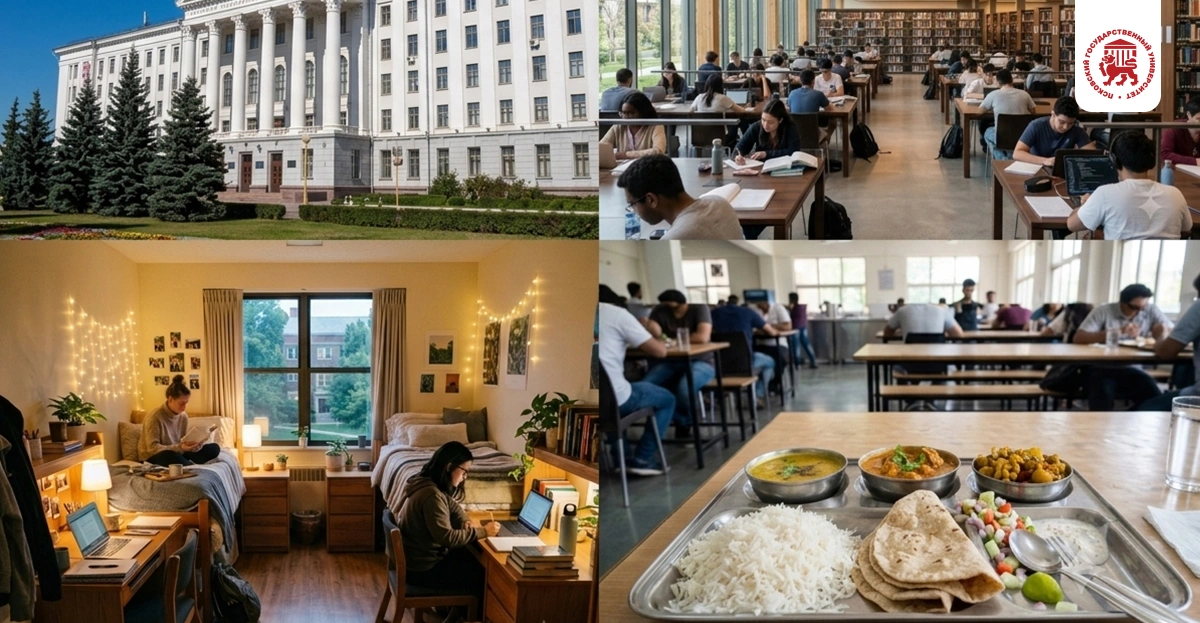
Preparing to pursue your MBBS studies at Pskov State University admission, you begin by understanding the entire application procedure. The upcoming admission intake into this university for the year 2027 is predicted to be conducted in the same manner as before and hence will be NMC-compliant and based on NEET marks; thus, making this university a very attractive choice for many Indian MBBS aspirants. This university, situated in northwestern Russia, provides the MBBS (General Medicine) course in English language medium, which is recognized by the National Medical Commission.
Why Pskov State University Is a Trusted Choice for MBBS
Before you begin, it helps to know why this university remains a reliable option for Pskov State University MBBS aspirants. The university is listed in the World Directory of Medical Schools (WDOMS) and recognised by India's National Medical Commission (NMC), alongside international bodies such as ECFMG (USA), FAIMER, and MCC. The six-year program five years of academic study plus a compulsory one-year clinical internship is taught entirely in English, so IELTS or TOEFL are typically not required. Graduates return home to prepare for India's licensing exam, whether that's the current FMGE or the upcoming NExT.
Eligibility Criteria for Pskov State University Admission 2027
Before you start the Pskov State University admission process, confirm you meet these basic requirements:
| Criteria | Requirement |
| Age | Minimum 17 years by 31st December of the admission year |
| Academic Qualification | Class 12 (or equivalent) with Physics, Chemistry, Biology and English |
| Minimum Marks | 50% aggregate in PCB for General category; 40% for SC/ST/OBC |
| Entrance Exam | A valid, qualifying NEET-UG score (valid for 3 years) |
NEET-UG: The Non-Negotiable Step
No matter how strong your application otherwise is, Indian students cannot join MBBS at Pskov State University or any university abroad without qualifying NEET-UG, as required under the NMC's Foreign Medical Graduate Licentiate (FMGL) Regulations, 2021. In 2026, the qualifying cutoff was 213 marks for the General category and 177 for SC/ST/OBC; the 2027 cutoff will be announced by the National Testing Agency closer to the exam.
Step-by-Step Pskov State University Admission Process for 2027
Once you've confirmed eligibility, here's how the Pskov State University admission process typically unfolds:
-
Shortlist and verify eligibility: Confirm your NEET-UG status, academic percentage, and age criteria against the table above.
-
Register and apply online: Submit the application form via the official Pskov State University portal or an authorised consultant, with scanned copies of your documents.
-
Document verification: The university's admission office reviews your NEET scorecard, mark sheets, and passport details for accuracy.
-
Receive your Letter of Invitation (LOI): Once verified, the university issues an official invitation letter, which is required for your visa application.
-
Pay the initial tuition fee: Fees are usually paid after receiving the LOI, as per the university's payment schedule.
-
Apply for a Russian student visa: Use your LOI and admission offer to apply at the nearest Russian consulate or visa centre.
-
Travel and enroll: Fly to Pskov, complete in-person registration, medical check-ups, and hostel formalities before classes begin.
Following each step in order and keeping digital and physical copies of every document helps you avoid delays that could push your application past the 2027 intake window.
Documents Required for Pskov State University MBBS Admission
Keep these documents ready; most need to be scanned in colour and later notarised:
-
Valid passport (minimum 18 months validity)
-
NEET-UG scorecard and admit card
-
Class 10 and Class 12 mark sheets and passing certificates
-
Birth certificate
-
Medical fitness and HIV-negative certificate
-
Passport-size photographs
-
NMC Eligibility Certificate (where applicable)
-
Invitation letter from the university (once issued)
Missing or mismatched documents are one of the most common reasons applications for MBBS admission Russia get delayed, so double-check names and spellings match across every document.
Pskov State University 2027 Intake: Timeline and Fees
Pskov State University admission for the 2027 intake typically opens several months before classes begin in October. Exact 2027 dates will be confirmed closer to the session, so complete your NEET-UG formalities and apply by mid-year to avoid a last-minute rush. On fees, Pskov State University is one of the more budget-friendly options for MBBS in Russia, with tuition and hostel costs well below private medical colleges in India, though exact figures should always be confirmed with the admission office, since fees are typically revised annually.
Conclusion
Your admission to Pskov State University in 2027 is dependent on the preparation done by you, which includes your eligibility for NEET-UG, arrangement of documents, and following the admission procedure accordingly. With NMC approval, English medium education, and an easy admission procedure, Pskov State University continues to be a suitable choice for Indian students seeking to pursue their MBBS education abroad. “Would you like to initiate your admission process in 2027?
FAQs
Is NEET-UG compulsory for Pskov State University admission in 2027?
Yes. Every Indian student must hold a valid, qualifying NEET-UG score to be eligible for MBBS admission at Pskov State University or any other foreign medical university, as per NMC rules.
What percentage do I need in Class 12 to apply?
You need at least 50% aggregate in Physics, Chemistry, Biology and English for the General category, or 40% for SC/ST/OBC candidates.
When does the 2027 academic session start?
Classes typically begin in October, though official dates for the 2027 intake will be confirmed by the university closer to the session.
Is Pskov State University recognised in India?
Yes, the university is recognised by the National Medical Commission (NMC) and listed in the World Directory of Medical Schools (WDOMS).
Do I need IELTS or TOEFL for admission?
No. Since the MBBS program is taught entirely in English for international students, IELTS or TOEFL scores are generally not required.